For Authors
Although the journal operates on the OJS/PKP platform, manuscript submission is currently managed via the official editorial email to ensure direct editorial handling. The journal is in the process of enabling full OJS-based submissions. Authors need to submit their manuscripts through ans.submit@gmail.com. Articles submitted as hard copies are not accepted. In case of any problems, the author can contact the Technical Assistance at ans.submit@gmail.com. Authors retain copyright of their published work and grant the journal the right of first publication. Articles are published under the Creative Commons Attribution 4.0 license.
Types of Manuscripts: Submit manuscripts in the following categories:
- Editorial
- Original article
- Review article
- Case report
- Short communication
- Medical education
- Letter to the editor
- Obituaries
Preparation of the Manuscript: The manuscript should be double-spaced, with a 1.5 cm margin, 12-point Times New Roman font, and justified. The pages of the manuscript should be numbered on the bottom right corner.
Cover Page: Cover page includes (a) the complete manuscript title; (b) a list of all authors’ full names, highest academic degrees, professional titles, affiliations, and locations of affiliations; (c) the name and address of the corresponding author, including, telephone number, and e-mail address and (d) sources of support that require acknowledgment, and a short title of no more than 100 characters (including spaces) for use as a running title.
Abstract: he abstract must not exceed 700 words and must be written as a continuous narrative with no subheadings. For original research articles, authors are strongly encouraged to structure the text sequentially into four distinct sections: Objective, Methods, Results, and Conclusions.
Keywords: Provide 3-7 keywords at the end of the abstract.
Introduction: All articles need an introduction that describes the objective of the investigation. The author should clearly state the specific goal or purpose of the article and indicate why it is worthy of attention. In the introduction, describe the hypothesis to be tested, the dilemma to be resolved, or the deficiency to be remedied.
Materials and Methods: The research plan, the materials (or subjects), and the methods used should be described. An explanation of how the disease was confirmed and the controls used must be included, as well as the details of the data obtained and how it was analyzed. Methods must include the following aspects:
When a surgical device is mentioned in the manuscript for the first time, its manufactures complete detail should be mentioned, such as the BRANDED name of the device/medication followed by name of manufacturer, city, and state. Please mention the name of the Ultrasound machine, its manufacturer, and the country of origin. In addition please mention the type of transducer and its frequency used for the study. This should be mentioned in the methods or the section where you describe how the ultrasound was performed.
Study Design: Selection and Description of Participants: Describe your selection of the observational or experimental participants (patients or laboratory animals, including controls) clearly, including eligibility and exclusion criteria and a description of the source population. Technical information: Identify the methods, apparatus (give the manufacturer’s name and address in parentheses), and procedures in sufficient detail to allow other workers to reproduce the results. Give references to established methods, including statistical methods (see below); provide references and brief descriptions for methods that have been published but are not well known; describe new or substantially modified methods, give reasons for using them, and evaluate their limitations. Identify precisely all drugs and chemicals used, including generic name(s), dose(s), and route(s) of administration.
Statistics: Whenever possible quantify findings and present them with appropriate indicators of measurement error or uncertainty (such as confidence intervals). The authors should report losses to observation (such as dropouts from a clinical trial). When data are summarized in the Result section, specify the statistical methods used to analyze them. Avoid non-technical uses of technical terms in statistics, such as ‘random’ (which implies a randomizing device), ‘normal’, ‘significant’, ‘correlations’, and ‘sample’. Define statistical terms, abbreviations, and most symbols. Specify the computer software used. For all P values include the exact value and not less than 0.05 or 0.001. Mean differences in continuous variables, proportions in categorical variables and relative risks including odds ratios and hazard ratios should be accompanied by their confidence intervals.
Results: All results should be in a clear, logical sequence and should adhere to the specific objective of the paper. Data presented in tables should not be duplicated in the text. Important trends and points observed in the study will need to be described. When data are summarized in the Results section, give numeric results not only as derivatives (for example, percentages) but also as the absolute numbers from which the derivatives were calculated, and specify the statistical methods used to analyze them. Restrict tables and figures to those needed to explain the argument of the paper and to assess its support. Use graphs as an alternative to tables with many entries; do not duplicate data in graphs and tables. Where scientifically appropriate, analyses of the data by variables such as age and sex should be included.
Discussion: The article submitted should explain clearly the outcome of the research considering the goals and results obtained. Any limitations on the materials or subjects and methods must be included. How the results differ from those obtained by previous investigators need to be presented with adequate comparisons and explanations. Include key findings (primary outcome measures, secondary outcome measures, results as they relate to a prior hypothesis); Strengths and limitations of the study (study question, study design, data collection, analysis and interpretation); Interpretation and implications in the context of the totality of evidence should be described. Include what this study adds to the available evidence, effects on patient care and health policy, etc.
Do not repeat the data or other material mentioned in the Introduction or the Results section. In particular, contributors should avoid making statements on economic benefits and costs unless their manuscript includes economic data and analyses. Avoid claiming priority and alluding to work that has not been completed.
References: References are to be numbered sequentially in the order in which they appear in the manuscript. Reference numbers are typed as superscripts, enclosed by square brackets.
Example: …… with no evidence of intratubular testicular neoplasia.[1]
Sample references are given below:
Articles in Journals
- Olson MC, Posniak HV, Fisher SG, Flisak ME, Salomon CG, Flanigan RC, et al. 1994. Directed and random biopsies of the prostate: indications based on combined results of transrectal sonography and prostate-specific antigen density determinations. Am J Roentgenol ;163:1407–11.
Issue with supplement: Payne DK, Sullivan MD, Massie MJ. 1996. Women’s psychological reactions to breast cancer. Semin Oncol ;23(1, Suppl 2):89-97.
Volume with supplement: Shen HM, Zhang QF. 1994. Risk assessment of nickel carcinogenicity and occupational lung cancer. Environ Health Perspect; 102 Suppl 1:275-82.
Books and Other Monographs:
Personal Author(s): Ringsven MK, Bond D. Gerontology and leadership skills for nurses. 2nd ed. Albany (NY): Delmar Publishers; 1996.
Editor(s), compiler(s) as author: Norman IJ, Redfern SJ, editors. Mental health care for elderly people. New York: Churchill Livingstone; 1996.
Chapter in A Book: Turgut AT, Dogra VS. Prostate carcinoma: Evaluation using transrectal sonography. In: Hayat MA, ed. Methods of cancer diagnosis, therapy and prognosis. 1st ed. New York, NA: Elsevier; 2008. p. 499-520.
Electronic Sources as Reference: Refer APA’s Quick guide on reference for electronic references. i.e. APA 7th edition requires brackets for some electronic citations. Include year, month, and date when possible. Use DOIs when available. Include retrieval dates
Monograph on the Internet format: Foley KM, Gelband H, editors. Improving palliative care for cancer [monograph on the Internet]. Washington: National Academy Press; 2001 [cited 2002 Jul 9]. Refer homepage/website and Part of a homepage/website formats in the hyperlink provided
Tables: Tables must be significant and provide a good summary of the study. Tables should be self-explanatory and not duplicate the data given in the text or figures. Each table must have a descriptive title and each column a heading. Tables are numbered in the order in which they are cited in the text. Abbreviations used in the tables are defined below each table. All arithmetic calculations (percentages, totals, and differences) must be double-checked for accuracy, and data must agree with the data given in the text.
Graphs: Graphs need to be exported as JPEG or TIF images and submitted as figures. Graphs should include clearly labeled error bars described in the figure legend.
Figure/Image Legends: All figure parts relating to one image should have the same figure number. The style for figure legends is given here:
Figure 1: Age and gender of the patient followed by presenting symptoms and subsequent diagnosis. Imaging modality used, organ/section imaged, view, and abnormality seen in the image. Add arrows pointing to the abnormality seen in the image.
Image Size: Black & white images: JPEG, or TIF format, greyscale mode, and 300 DPI resolution. Color images: 300 DPI resolution, JPEG, or TIF format.
Video Clips: The journal encourages authors to submit video clips, cine clips, or real-time images (preferably in ‘mp4’). The maximum size of each multimedia file should not exceed 30 MB. In addition to the video content, authors must provide a still image from each video file. Supply TIFF or JPEG files.
Submission of the Manuscript: All manuscripts must be submitted online to ans.submit@gmail.com . You will see step-by-step instructions when you are submitting your manuscript. You will need to submit the following documents as separate files.
Conflicts of Interest: All authors of submitting the manuscript to the journal must disclose any and all conflicts of interest they may have with publication of the manuscript that is mentioned in the manuscript. If no conflict exists, the authors should state: The authors declare that they have no conflict of interest.
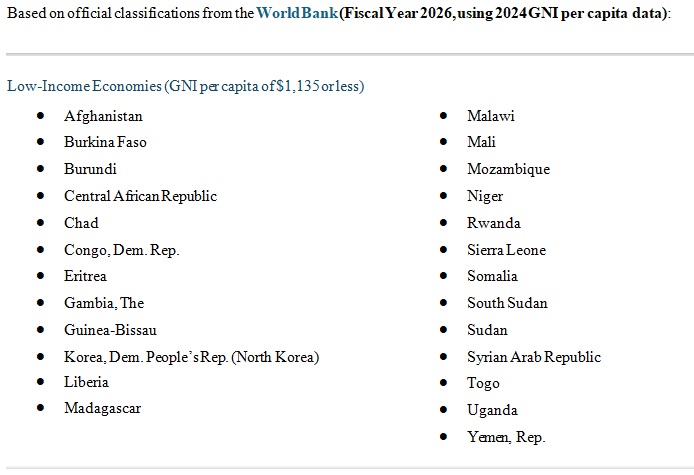
Publication/Processing Fee Advanced Natural Sciences: Life and Health Sciences charges the authors or authors’ institutions for the publications of manuscripts. There are no submission charges, Article processing charges are USD 100 per accepted manuscript. Article Processing Charges (APCs) charged only after acceptance. The APC covers editorial processing, peer review management, copyediting, online publication, and long-term digital archiving. Full waivers or discounts may be considered on a case-by-case basis for authors from low-income countries or in special circumstances. The APC is non-refundable once the publication process has commenced. However, a full refund will be issued if the article is not published due to an error or fault on the part of the journal.
Privacy: Names and email addresses entered on this journal's website will be used solely for the purposes designated by this journal and will not be used for any other purposes or provided to other individuals or organizations.